
Same brand, two different games. Here's what to optimize on each, why the rules don't transfer, and how each channel quietly makes the other stronger.
By Jade Mossop, Global Creative Marketing Director
Amazon and your own store look like the same job. They are opposite jobs, and the creative that wins one loses the other.
Start with the shopper's question. On Amazon, they've already decided to buy the thing. They typed "matcha" and now they're choosing between ten of them. The question is "which one?" They're at the shelf with their wallet out. So you optimize for the decision: a hero image that wins at thumbnail size, an image and A+ stack that answers objections in order, a title and bullets built on the keywords people actually search, and a gallery they can buy straight from. Reviews and rank do the reassuring, because on Amazon the crowd is your best copywriter.
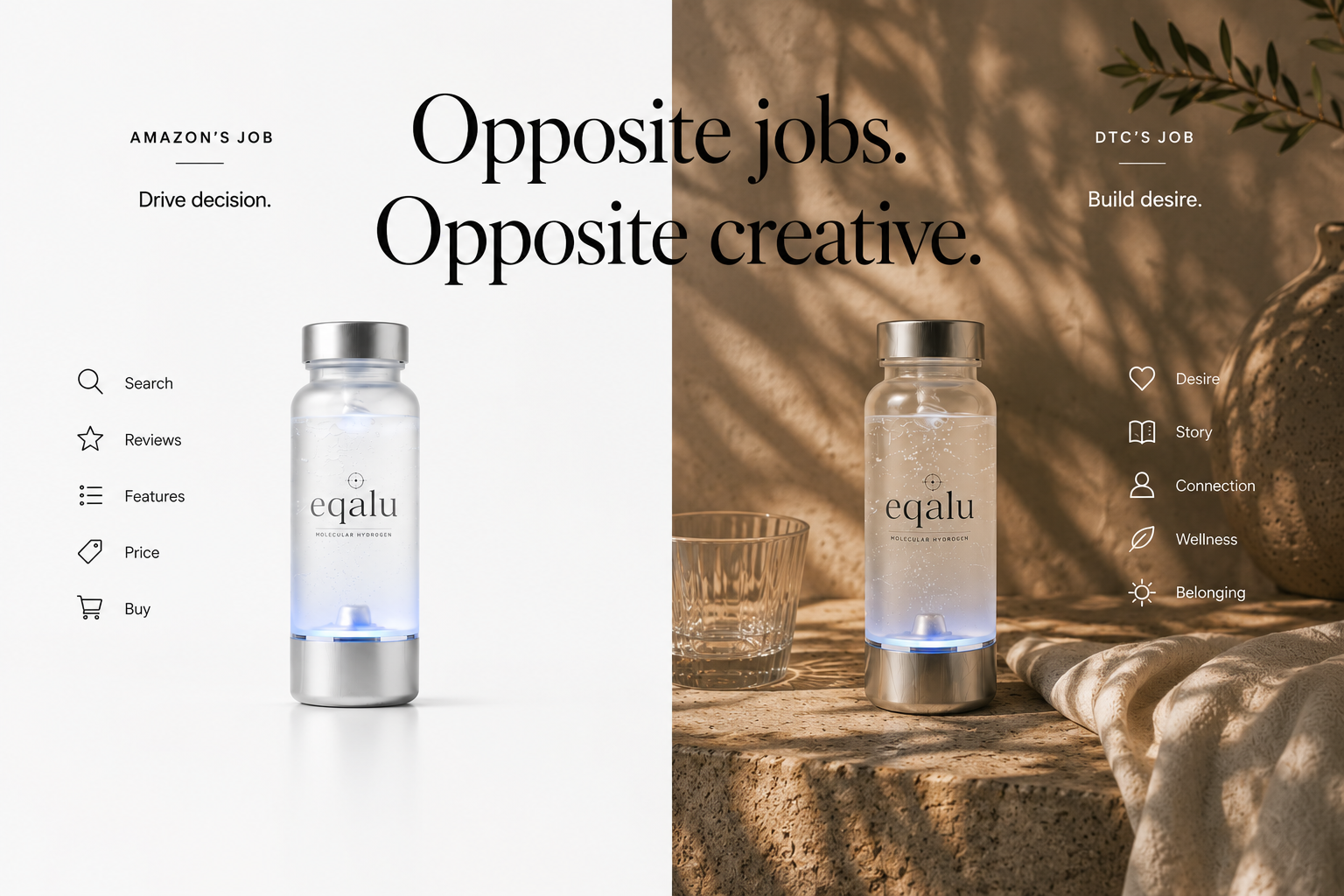
On your own site, nobody's wallet is out. They clicked an ad or a link, and the question is "why you, and why now?" So you optimize for desire, not decision: a hero that works like a film, copy that earns the scroll instead of surviving it, the founder and the why and the world the brand lives in, things Amazon gives you no room to say, and a gallery that's instantly shoppable so desire converts before it cools. Run that brand film on an Amazon listing and it just slows down a decision already made. Run a bare spec grid on your homepage and a curious stranger has no reason to stay.
Then there's what each one costs you. Amazon is a search engine with a checkout, and it charges like a landlord. A referral cut on every sale, typically 8-15% depending on your category, with most categories at 15%, plus fulfillment fees on top if you use FBA, and advertising spend to maintain visibility. Add it all up, and according to multiple seller analytics platforms, total fees typically consume 30-45% of a product's selling price. You rent reach and convenience, and you never own the customer. Your own store flips it: you pay to get people there, but you keep the margin, the data, and the relationship.
One rule they share: never go out of stock. Amazon's ranking algorithm penalizes stockouts. Industry consensus suggests dropping below 30 days of coverage can trigger ranking suppression even before you're technically out, and rebuilding lost momentum takes weeks. TikTok Shop enforces a similar logic: a stocked-out listing drives conversions to zero, and the algorithm interprets that as irrelevance.
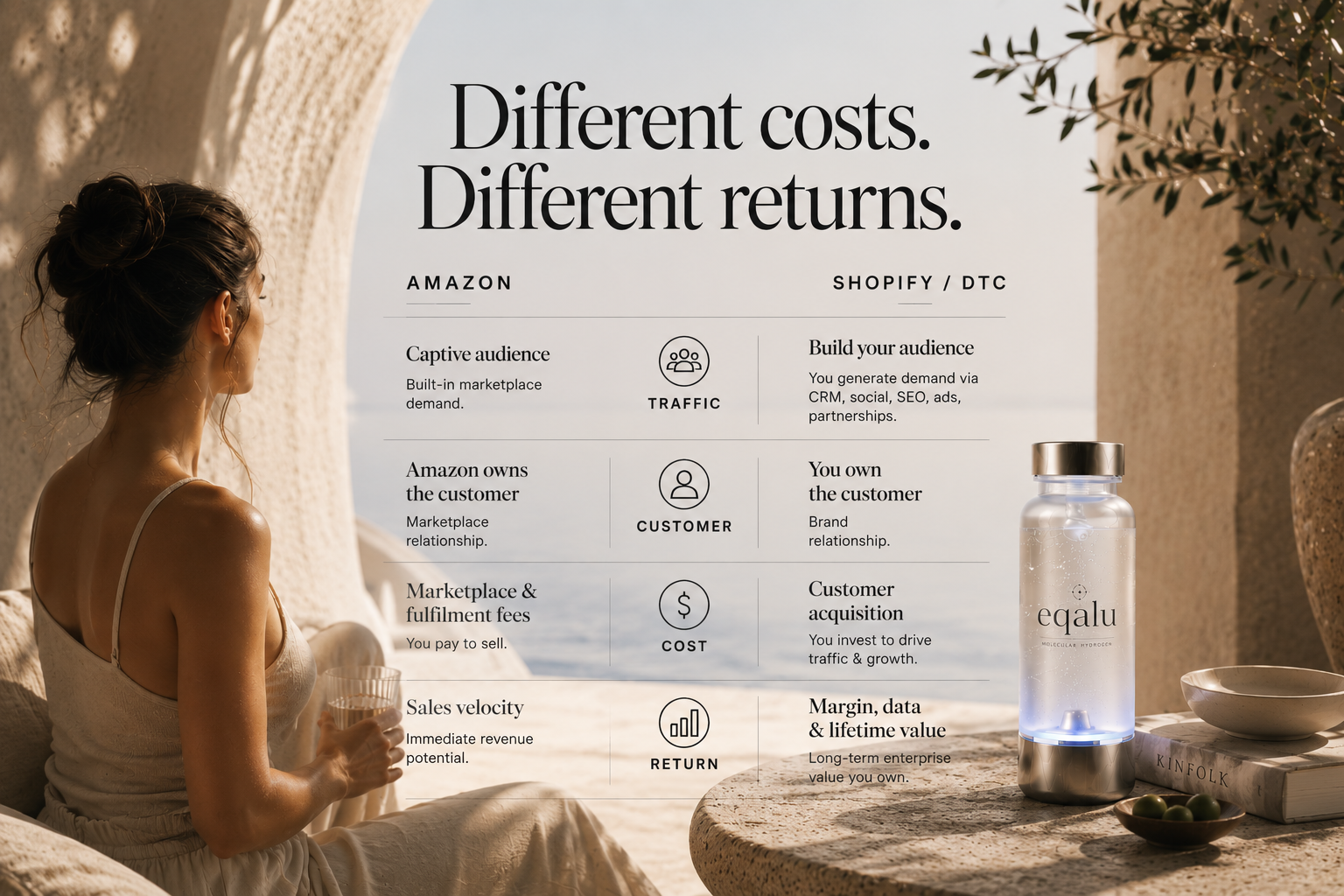
Here's the part that's easy to miss. These two are not separate boxes. They're a web, and the threads run both ways. The keywords you mine on Amazon should write your DTC titles and meta. The reviews you earn on Amazon should be syndicated onto your own product pages, where they lift conversion for free. And the brand you build on your own site and on social comes back to Amazon as branded search and a higher conversion rate, because a shopper who already knows you barely hesitates. Optimize each channel for its own question, then wire them so each one feeds the next.
The move for you: before you brief anything, write the shopper's question at the top, "which one?" or "why you?" Optimize to that question, then check the threads: what Amazon teaches DTC and what DTC sends back to Amazon. Run them as one web, and the same brand closes the sale on the shelf and earns the loyalty at home.
